G.W. Bot: Lake Mungo Glyphs - A Portrait (image from here)
Prints are everywhere in the RA Summer Exhibition. There were so many I liked, but a few in particular made a lasting impression. I was delighted to see two by the Australian printmaker G.W. Bot, whose work inspires me in the sense that I am impelled to take myself to my lino-cutting desk.
G.W. Bot: Lake Mungo Glyphs - Mother (image from here)
Of all of Peter Freeth's works this one caught my imagination most.
Peter Freeth: Over the wall (image from here)
Cornelia Parker: Deception glass (image from here)
Cornelia Parker's prints of glasses intrigue me, as did Liz Rideal's print on fabric:
Liz Rideal: Temple of Jove Anxur, Terracina (image from here)
Showing posts with label Food for thought. Show all posts
Wednesday, July 03, 2019
Thursday, March 21, 2019
Nothing is given: someone somewhere always pays a price
Spring is the time when so many begin to visit National Trust gardens. The image above is of a garden in Cornwall, and is borrowed from here. But watery views are not always delightful.
Mozambique after Cyclone Idai (image from here)
Thursday, March 07, 2019
Influential incomers
George Adams: Das Mechanische Ballett (image from here) Exhibition at the Isokon Gallery
The Lucy Rie exhibition which we visited in January in York (and also covered in A Place Called Space blog here) is part of a year-long celebration of incoming artists, refugees from Nazi Europe. Insiders/Outsiders is a festival of various arts, and also a book published by Lund Humphries.
Cover image from Josef Herman: Refugees
My copy arrived yesterday and it looks to be a treasure trove of essays which will keep me going for quite some time.
The Lucy Rie exhibition which we visited in January in York (and also covered in A Place Called Space blog here) is part of a year-long celebration of incoming artists, refugees from Nazi Europe. Insiders/Outsiders is a festival of various arts, and also a book published by Lund Humphries.
Cover image from Josef Herman: Refugees
My copy arrived yesterday and it looks to be a treasure trove of essays which will keep me going for quite some time.
Tuesday, March 05, 2019
Inspiration from a dark place
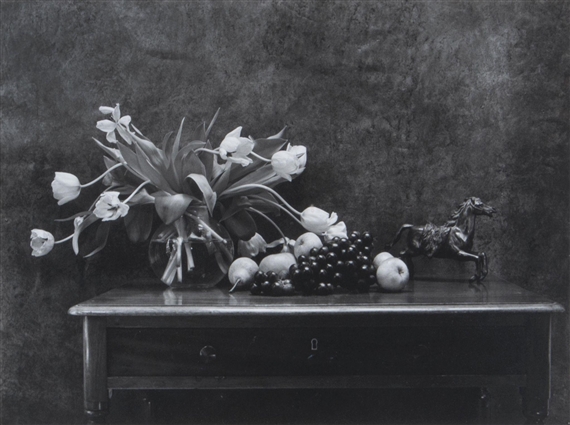
Don McCullin: Still life in my garden shed (image from here)
On Sunday we went to the Tate to see the exhibition of Don McCullin's photographs. It is a big, excellent show of his work - review here which says that the work is almost overwhelming. It did overwhelm me; I was thoroughly depressed by the time I had reached the last room, where even the soul-salving landscapes are printed so dark that they pervade gloom. The still lives are calming, but again McCullin who prints his photographs dark, seems to continue to see inhumanity leaking out everywhere.
Don McCullin: Still life, tulips (image from here)
The emotion I still carry in response to the stark statements of witness is one of shame and helplessness in the face of humanity's continuing, repeated basest instincts. Yet out of this strong emotional response has come a need to work, and this thought:
On Sunday we went to the Tate to see the exhibition of Don McCullin's photographs. It is a big, excellent show of his work - review here which says that the work is almost overwhelming. It did overwhelm me; I was thoroughly depressed by the time I had reached the last room, where even the soul-salving landscapes are printed so dark that they pervade gloom. The still lives are calming, but again McCullin who prints his photographs dark, seems to continue to see inhumanity leaking out everywhere.
Don McCullin: Still life, tulips (image from here)
The emotion I still carry in response to the stark statements of witness is one of shame and helplessness in the face of humanity's continuing, repeated basest instincts. Yet out of this strong emotional response has come a need to work, and this thought:
Labels:
Doodle,
Exhibition,
Food for thought,
Photography
Tuesday, December 11, 2018
Lack of cash
In this increasingly card-paying life, I am finding myself worrying about running out of cash - not because I have no money. I try to make sure that I have cash on hand for donations - not least to buskers.
Saturday, September 01, 2018
Words, words, words
I have been fascinated by words for longer than I can remember. I was an unplanned child, born at a time when my parents had no space and less money. I was with my mother all the time while my father studied at university and my mother either embroidered tea cloths for pin money or studied English. I grew hearing two languages: Scots English and Greek.
My mother did her language learning out loud, reciting, reading to me. We learned to read together. I did not know that was what I was doing. Then before I was one year old we went to Greece, and I as surrounded by aunts with other sounds: Greek. Apparently I was silent for a worrying time before embarking on my attempts.
Then back to Scotland for my second birthday - back to sounds I had almost if not forgotten. Then back to Greece when I was three - this time silent for four weeks before I began to speak fluently, in Greek, appropriately pronounced, with idiom, and including (unknowingly) Pontic Greek expressions (much delight and clapping - and pinching of my cheek!).
I returned to Scotland after my fifth birthday in order to start school. I had forgotten my English. The three day train journey across Europe started in panic - I could understand what my mother said to me in English, but I could not find the words in myself to speak. A kind university student, returning from vacation on the same train dedicated himself to reminding me first of nouns by pointing, then gradually of everything else. (I would have suffered so much more if we had simply flown as is normal today!)
In those very early years I realised that it's not just a difference of vocabulary. Body language is also different, and thought processes, reactions, fine expression of emotions. How much of a potential to understand more is missed when only being in possession of one language.
I went on to learn French then German, and was lucky enough to spend some time in each country. Then by studying literature and language development at university doors and windows were opened and my understanding and curiosity grew. Poetry became a joy rather than an embarrassing tedious chore of rote learning and recitation. A career in publishing drew on all of the above, and contributed the additional delights of typography: the visual aspects of language, lettering, and layout.
Imagine then my recent dilemma when faced with a 19th century sample book - containing a partial gazetteer as I try to whittle down our over-large collection of books. Was it simply sentimentality which was making me want to keep it? By William Morris's dictum it is neither of use nor beauty - or was it? What on earth could I do with it.
All at once I knew what to do. I scanned the pages which most appealed. And within this post are the initial experiments for my new project.
My mother did her language learning out loud, reciting, reading to me. We learned to read together. I did not know that was what I was doing. Then before I was one year old we went to Greece, and I as surrounded by aunts with other sounds: Greek. Apparently I was silent for a worrying time before embarking on my attempts.
Then back to Scotland for my second birthday - back to sounds I had almost if not forgotten. Then back to Greece when I was three - this time silent for four weeks before I began to speak fluently, in Greek, appropriately pronounced, with idiom, and including (unknowingly) Pontic Greek expressions (much delight and clapping - and pinching of my cheek!).
I returned to Scotland after my fifth birthday in order to start school. I had forgotten my English. The three day train journey across Europe started in panic - I could understand what my mother said to me in English, but I could not find the words in myself to speak. A kind university student, returning from vacation on the same train dedicated himself to reminding me first of nouns by pointing, then gradually of everything else. (I would have suffered so much more if we had simply flown as is normal today!)
In those very early years I realised that it's not just a difference of vocabulary. Body language is also different, and thought processes, reactions, fine expression of emotions. How much of a potential to understand more is missed when only being in possession of one language.
I went on to learn French then German, and was lucky enough to spend some time in each country. Then by studying literature and language development at university doors and windows were opened and my understanding and curiosity grew. Poetry became a joy rather than an embarrassing tedious chore of rote learning and recitation. A career in publishing drew on all of the above, and contributed the additional delights of typography: the visual aspects of language, lettering, and layout.
Imagine then my recent dilemma when faced with a 19th century sample book - containing a partial gazetteer as I try to whittle down our over-large collection of books. Was it simply sentimentality which was making me want to keep it? By William Morris's dictum it is neither of use nor beauty - or was it? What on earth could I do with it.
All at once I knew what to do. I scanned the pages which most appealed. And within this post are the initial experiments for my new project.
Labels:
Doodle,
Food for thought,
Inspiration,
Project,
Reminiscence
Sunday, August 26, 2018
Current reading
William McCance: Woman reading (image from here)
I have two main books on the go at present: Red Thread, On Mazes & Labyrinths by Charlotte Higgins, and A line made by walking by Sara Baume. It was not at all planned that I would read these together, but they complement each other remarkably. I have only just started the former, but am finding it a book that I want to read consistently rather than just dipping for information. The red thread is pulling me, as I enjoy the content which is of a personal as well as informational telling. (A review can be found here.)
The red thread for the protagonist Frankie in A line made by walking is her knowledge and recall of works of art, which pulls her through the labyrinth of her breakdown. (Of course the title of the novel is also the title of a seminal work of art by Richard Long.) Frankie concentrates on small, tiny, almost microscopic details of observation and of thought, and of feeling, which somehow does not depress me as reader. Rather I find myself participating in the observations while still standing outside it all. A fascinating read. (A review can be found here.)
I have two main books on the go at present: Red Thread, On Mazes & Labyrinths by Charlotte Higgins, and A line made by walking by Sara Baume. It was not at all planned that I would read these together, but they complement each other remarkably. I have only just started the former, but am finding it a book that I want to read consistently rather than just dipping for information. The red thread is pulling me, as I enjoy the content which is of a personal as well as informational telling. (A review can be found here.)
The red thread for the protagonist Frankie in A line made by walking is her knowledge and recall of works of art, which pulls her through the labyrinth of her breakdown. (Of course the title of the novel is also the title of a seminal work of art by Richard Long.) Frankie concentrates on small, tiny, almost microscopic details of observation and of thought, and of feeling, which somehow does not depress me as reader. Rather I find myself participating in the observations while still standing outside it all. A fascinating read. (A review can be found here.)
Thursday, August 23, 2018
Elaborate, joyous, outrageous, ...
are all adjectives applied to the ceramics of Angus Suttie. There is an exhibition of his work on at present at the Crafts Study Centre in Farnham. The exhibition originated at the Ruthin Crafts Centre which also produced a beautiful slim catalogue.
(image from here)
I am not a fan of the over-elaborate, of anything which I put into the category of encrusted, and so I was not eager, but simply curious to see the exhibition based on the quality normally found at the Crafts Study Centre. I was so pleased that I made the effort, because although still not my favourite ceramics, there is something vitally compelling about the power in these pieces. They are very obviously personal expressions of strong emotion. At the very least teapots with attitude!
By taking a traditionally functional object and riffing on that theme, anthropomorphising it, stretching credibility, a cheeky joy is evoked, and even more, I found them thought-provoking.
Angus Suttie: Doodle plate (image from here)
Although I could feel the power of the brighter, elaborately coloured works, like the Doodle plate above, my preferred pieces were the 'duller' more sculptural ones made later in his short career, when AIDS had made an impact on his friends' and his lives.
Angus Suttie: Large Blue Form (image from here)
This piece above in the V&A collection appeals to me more - but I surprised myself by how drawn I was to the work as a whole. This is not only the result of such a powerful expression of personality, but also the excellence of presentation. A solo exhibition is a wondrous vehicle for examining an artist's work on their own terms.
(image from here)
I could not find images online of the pieces I responded to most in the exhibition - probably because the pieces in the show are mostly from Suttie's own collection. But I found several examples which I think show his style.
(image from here)
(image from here)
Suttie also made ceramic rings - decorative knuckle dusters. In the exhibition there is a photograph of dancer/choreographer Michael Clark wearing one.
(image from here)
The above and some more images can be found here.
(image from here)
I am not a fan of the over-elaborate, of anything which I put into the category of encrusted, and so I was not eager, but simply curious to see the exhibition based on the quality normally found at the Crafts Study Centre. I was so pleased that I made the effort, because although still not my favourite ceramics, there is something vitally compelling about the power in these pieces. They are very obviously personal expressions of strong emotion. At the very least teapots with attitude!
By taking a traditionally functional object and riffing on that theme, anthropomorphising it, stretching credibility, a cheeky joy is evoked, and even more, I found them thought-provoking.
Angus Suttie: Doodle plate (image from here)
Although I could feel the power of the brighter, elaborately coloured works, like the Doodle plate above, my preferred pieces were the 'duller' more sculptural ones made later in his short career, when AIDS had made an impact on his friends' and his lives.
Angus Suttie: Large Blue Form (image from here)
This piece above in the V&A collection appeals to me more - but I surprised myself by how drawn I was to the work as a whole. This is not only the result of such a powerful expression of personality, but also the excellence of presentation. A solo exhibition is a wondrous vehicle for examining an artist's work on their own terms.
(image from here)
I could not find images online of the pieces I responded to most in the exhibition - probably because the pieces in the show are mostly from Suttie's own collection. But I found several examples which I think show his style.
(image from here)
(image from here)
Suttie also made ceramic rings - decorative knuckle dusters. In the exhibition there is a photograph of dancer/choreographer Michael Clark wearing one.
(image from here)
The above and some more images can be found here.
Labels:
Art / Craft,
Artist,
Exhibition,
Food for thought
Monday, June 04, 2018
The female body, drawn large
(image from here)
There's an exhibition of Jenny Saville's paintings, Ancestors is on at the Gagosian gallery in New York at present. There is a review here, and another here, both with more images.
I find Saville's work extremely powerful, and it strikes me dumb. Rather like my reaction to Francis Bacon's work, I have no adequate words, perhaps no adequate thoughts, ... just powerful emotions.
There's an exhibition of Jenny Saville's paintings, Ancestors is on at the Gagosian gallery in New York at present. There is a review here, and another here, both with more images.
I find Saville's work extremely powerful, and it strikes me dumb. Rather like my reaction to Francis Bacon's work, I have no adequate words, perhaps no adequate thoughts, ... just powerful emotions.
Labels:
Artist,
Caught my eye,
Exhibition,
Food for thought
Friday, January 19, 2018
Back to the 3D thing
This week I went on a two day workshop on sculptural textiles with Debbie Lyddon at InStitches. I have been following Debbie Lyddon's blog for some time and am intrigued by and attracted to her work and her methods. When the opportunity arose to attend a workshop close to where I live - well, it would have been daft not to try it out. Especially as I have this longterm background itch about doing something 3D-ish.
Debbie Lyddon: Auricle (detail) image from here
The two days worked really well. The venue is great - a good space, well equipped, friendly, and generous folks. The other participants provided such a broad range of input, and fun. And Debbie herself is a great instructor, provider, and facilitator - as well as being great fun. Obviously I had a great time!
But it was a productive time too. I think that maybe this time I have come closer to what might suit my needs. On this workshop I actually made a more or less complete piece of work. Usually my intention is to make samples to remind me of techniques, but this time I was moved to try to marry one technique - stiffened pleats - with some element which would make the piece mine.
Wax as a surface, a material, an idea has long held an allure for me, reinforced by an excellent Experimental Batik on Paper workshop I attended some ten years ago or so at West Dean with Hetty van Boekhout (the course is on this year too). It was the wax element of the Debbie Lyddon workshop that was initially what interested me the most. And the sample I made for myself has ignited even more enthusiasm.
A piece of muslin was stiffened overnight with a coat of emulsion paint. On that I stitched (using an awl to make the holes before threading the needle through) quite a thick slippery, disobedient but scrummilly beautiful space dyed thread round an outline. Ironing wax all over this gave a fabulous feel to an even stiffer cloth, flattened the thread into the fabric, filled out the awl holes, ... gave me something very exciting.
So much to bubble away on my back burner now! Even though I did say a couple of posts ago that I enjoy thinking, I do also enjoy trying things out. As Andreas Gursky the photographer said in the Guardian newspaper yesterday: 'As I'm always telling my students: you won't get anywhere sitting at a table thinking. You learn by doing. And even if you do something wrong, the result may be much more interesting than what you went looking for.'
Debbie Lyddon: Auricle (detail) image from here
The two days worked really well. The venue is great - a good space, well equipped, friendly, and generous folks. The other participants provided such a broad range of input, and fun. And Debbie herself is a great instructor, provider, and facilitator - as well as being great fun. Obviously I had a great time!
But it was a productive time too. I think that maybe this time I have come closer to what might suit my needs. On this workshop I actually made a more or less complete piece of work. Usually my intention is to make samples to remind me of techniques, but this time I was moved to try to marry one technique - stiffened pleats - with some element which would make the piece mine.
Wax as a surface, a material, an idea has long held an allure for me, reinforced by an excellent Experimental Batik on Paper workshop I attended some ten years ago or so at West Dean with Hetty van Boekhout (the course is on this year too). It was the wax element of the Debbie Lyddon workshop that was initially what interested me the most. And the sample I made for myself has ignited even more enthusiasm.
A piece of muslin was stiffened overnight with a coat of emulsion paint. On that I stitched (using an awl to make the holes before threading the needle through) quite a thick slippery, disobedient but scrummilly beautiful space dyed thread round an outline. Ironing wax all over this gave a fabulous feel to an even stiffer cloth, flattened the thread into the fabric, filled out the awl holes, ... gave me something very exciting.
So much to bubble away on my back burner now! Even though I did say a couple of posts ago that I enjoy thinking, I do also enjoy trying things out. As Andreas Gursky the photographer said in the Guardian newspaper yesterday: 'As I'm always telling my students: you won't get anywhere sitting at a table thinking. You learn by doing. And even if you do something wrong, the result may be much more interesting than what you went looking for.'
Labels:
Art / Craft,
Artist,
Exercise,
Food for thought
Monday, December 04, 2017
Self examination
Paula Rego: Self Portrait III (image from here)
Far from a bland smiley selfie, examples of profound self examination are to be seen at the exhibition at the Jerwood Gallery in Hastings: Paula Rego - The Boy Who Loved The Sea and other stories. It is always a joy, an excitement, and an inspiration to see Paula Rego's work, and three groups of work in particular struck me when we went to Hastings yesterday.
The more powerful two were the 'damage' self portraits and the Depression pastels. Rego fell onto her face early this year, causing much damage to herself and needing hospital treatment. She became fascinated, however, in drawing herself in this state, and it was a wondrous experience to witness her curiosity through her drawings. They have been compared with Bacon's work, but the latter were metaphor while Rego's are so immediately, straightforwardly truthful - and also a look at oneself as if an object.
Paula Rego: Depression V detail (image from here)
The Depression pastels are equally powerful, but in a slightly different way. First they were a means of working through a period of depression. And then they are at a remove in that the figure is not drawn from Rego herself. Her usual model posed for them. (Eirene wrote a post about the Marlborough exhibition earlier this year here.) This time the drawings were of someone else, but about oneself - one's own feelings.
The third group that impressed me yesterday were a delight: three aged mermaids. (Image above from here)
Far from a bland smiley selfie, examples of profound self examination are to be seen at the exhibition at the Jerwood Gallery in Hastings: Paula Rego - The Boy Who Loved The Sea and other stories. It is always a joy, an excitement, and an inspiration to see Paula Rego's work, and three groups of work in particular struck me when we went to Hastings yesterday.
The more powerful two were the 'damage' self portraits and the Depression pastels. Rego fell onto her face early this year, causing much damage to herself and needing hospital treatment. She became fascinated, however, in drawing herself in this state, and it was a wondrous experience to witness her curiosity through her drawings. They have been compared with Bacon's work, but the latter were metaphor while Rego's are so immediately, straightforwardly truthful - and also a look at oneself as if an object.
Paula Rego: Depression V detail (image from here)
The Depression pastels are equally powerful, but in a slightly different way. First they were a means of working through a period of depression. And then they are at a remove in that the figure is not drawn from Rego herself. Her usual model posed for them. (Eirene wrote a post about the Marlborough exhibition earlier this year here.) This time the drawings were of someone else, but about oneself - one's own feelings.
The third group that impressed me yesterday were a delight: three aged mermaids. (Image above from here)
Friday, November 17, 2017
"What was the artist trying to say?"
I overheard this again on Sunday at the Jasper Johns exhibition, and mused once more over why it is that some observers are so desperate to know what an artist is trying to communicate. I know that when I am in the throes of making a piece, I am far from sure what I'm trying to say. Indeed even after I've finished, if I have to write a few words for an exhibition, it often taxes me.
Julie Speed: Concertina (image from here)
Then when responding to a comment on my last post I was reading an interview on Julie Speed's website (scroll down the page past the videos to arrive at the interviews on the link) I came across an elegant way of putting it:
Julie Speed: Concertina (image from here)
Then when responding to a comment on my last post I was reading an interview on Julie Speed's website (scroll down the page past the videos to arrive at the interviews on the link) I came across an elegant way of putting it:
An Interview with Julie Speed: Part II
December 12, 2012 Ross Smeltzer
The Search For Meaning in
Julie Speed’s Works
Q.
What are you trying to communicate in your paintings? What do you want people
looking at your work to think about and feel?
Julie
Speed.
I’m not trying to communicate. I’m trying to solve a puzzle that is visual
first and narrative second. The elements are color, form, line, texture,
bits from the news, light from the windows, what I just saw in the street or in
a tree when I walked to town to get the mail, a book, a phrase, a shadow and a
thousand other small observations, so many that I could never count them or
quantify them but they all occur and combine in the present. It’s a
puzzle for me now while I’m working on it and it
takes every bit of concentration to get the work right. As a practical
matter it wouldn’t be useful to me to try to factor in my guess about how
someone else would think or feel about it at some future time. It’s hard
enough to tune out my own inner bullshit.
Q.
In the past, you have said there are no objective meanings in your works: you
expect different viewers to produce different – equally legitimate – meanings.
But, given your use of repeated symbols and images, do you think you are
attempting to communicate certain meanings, thoughts and perspectives to those
viewing your works? In other words, are all interpretations of your work
equally legitimate and, if not, why not?
Julie
Speed.
I do use certain images over and over but I’m not deliberately embedding
symbols in some kind of code. I repeat certain images because
they’re useful compositionally or simply because I like to paint them.
However,
while I don’t know exactly how or why, I do know that if I get the composition
and content balanced just right then the work will sometimes strike a chord in
another person – not in most people of course, just a few….but when that
happens I like to hear what it is that they thought or felt.
It’s certainly just as valid and often way
more interesting to me than my own thoughts because I’ve already thought my own
thoughts – they’re no longer new to me.
Julie Speed: Jawbone (image from here)
Critics and the art market do not help observers of art to enjoy the act of observation for themselves. I am still fuming about the obscenity of the same painting being deemed worth over $400 million if it is by one artist, but only worth less than $100 if thought to be by another.
Friday, October 20, 2017
Poached eggs and other savoured memories
Diego Velazquez: An old woman cooking eggs (image from here)
I had been exposed to a wide variety of visual art from my earliest years, but I was over 11 years old before I entered an institutional art gallery. My first visit was to the Scottish National Gallery with my secondary school in Edinburgh. I subsequently visited many times after that, both with the school, but mostly alone. The year I took History of Art as part of my degree (still in Edinburgh) I was there at least once a week.
Several of the paintings there remain prominently in my head and in my heart, but my favourite of all is the Velazquez above. I find it a complete stunner that never shuts down my curiosity. It presents the possible beginning, or middle, or maybe even the end of many stories. The skill of course is breath-taking. And I love that my grandmother's mortar and pestle are there right at the front. I remember as a small child battering the shape out of walnuts using those heavy brass instruments that I was barely able to lift!
Inevitably one of my other favourites is the now widely known The Reverend Robert Walker Skating on Duddingston Loch (perhaps) by Raeburn. (image above from here)
Daniel Macnee: A lady in grey (the artist's daughter)
And a much less well known lady whom I used to greet on every visit: A Lady in Grey. This again had a personal connection because it was unusual to have a portrait showing a young woman engaged in an occupation which dominated my leisure hours: hand stitching.
Paul Gauguin: Vision of the Sermon (Jacob wrestling with the Angel)
In my teenage years I was obsessed by all things French (none of my family knew anything about France or the French, so my interest was left well alone), and so inevitably I was drawn by the strikingly dramatic Gauguin - indeed the whole painting cried out to me before I knew who had made it. (If you scroll down the page linked under the image above you will find a short film which chimes very much with my own youthful experience - strangely enough we were reading The moon and sixpence at school around the time of my first visits to the gallery.)
Edgar Degas: Woman Drying Herself
The other French painting which stays with me from those early days is a Degas pastel. I had loved both the realism and the looseness, the chalkiness of the pastel as well as its subtle colour - without at that point knowing anything about the material. Later, during my art history studies the tutor who specialised in Post Impressionism told us that this work had had the glass cleaned so assiduously that the pastel had now transferred from the paper to the glass! I do not know whether this is really true.* And I don't know whether my curiosity about and my love of soft pastels came from this work and the story.
Of course I discovered many other delights in the collection, and during the intensive art history visits learned so much about them all - a sweet consolation for not being permitted to study to be an artist myself - but these five works in particular have a special place in my memory. Over the decades ever since then I have continued to look, to discover, to pursue my curiosity, to research not only the art that appeals, but also the art that does not appeal. I believe that finding out why something does not capture one's delight can illuminate and develop one's looking and understanding.
I must admit to doing a bit less of the latter now. I seem to have reached a point when - with some exceptions - I want to save my art curiosity for delving deeper into the realms that I already enjoy. Nowadays that seems to feed my own work much more, and I save my wider curiosity for other subjects such as Roman architecture, satellite mapping of the oceans, and geology (all current or imminent FutureLearn courses).
*I don't think it can be true because the implication in 1967 was that years of cleaning had lifted the pastel off the paper, and yet I now see that the work was only donated to the gallery in 1960. I must have seen it first not long after that gift took place.
I had been exposed to a wide variety of visual art from my earliest years, but I was over 11 years old before I entered an institutional art gallery. My first visit was to the Scottish National Gallery with my secondary school in Edinburgh. I subsequently visited many times after that, both with the school, but mostly alone. The year I took History of Art as part of my degree (still in Edinburgh) I was there at least once a week.
Several of the paintings there remain prominently in my head and in my heart, but my favourite of all is the Velazquez above. I find it a complete stunner that never shuts down my curiosity. It presents the possible beginning, or middle, or maybe even the end of many stories. The skill of course is breath-taking. And I love that my grandmother's mortar and pestle are there right at the front. I remember as a small child battering the shape out of walnuts using those heavy brass instruments that I was barely able to lift!
Inevitably one of my other favourites is the now widely known The Reverend Robert Walker Skating on Duddingston Loch (perhaps) by Raeburn. (image above from here)
Daniel Macnee: A lady in grey (the artist's daughter)
And a much less well known lady whom I used to greet on every visit: A Lady in Grey. This again had a personal connection because it was unusual to have a portrait showing a young woman engaged in an occupation which dominated my leisure hours: hand stitching.
Paul Gauguin: Vision of the Sermon (Jacob wrestling with the Angel)
In my teenage years I was obsessed by all things French (none of my family knew anything about France or the French, so my interest was left well alone), and so inevitably I was drawn by the strikingly dramatic Gauguin - indeed the whole painting cried out to me before I knew who had made it. (If you scroll down the page linked under the image above you will find a short film which chimes very much with my own youthful experience - strangely enough we were reading The moon and sixpence at school around the time of my first visits to the gallery.)
Edgar Degas: Woman Drying Herself
The other French painting which stays with me from those early days is a Degas pastel. I had loved both the realism and the looseness, the chalkiness of the pastel as well as its subtle colour - without at that point knowing anything about the material. Later, during my art history studies the tutor who specialised in Post Impressionism told us that this work had had the glass cleaned so assiduously that the pastel had now transferred from the paper to the glass! I do not know whether this is really true.* And I don't know whether my curiosity about and my love of soft pastels came from this work and the story.
Of course I discovered many other delights in the collection, and during the intensive art history visits learned so much about them all - a sweet consolation for not being permitted to study to be an artist myself - but these five works in particular have a special place in my memory. Over the decades ever since then I have continued to look, to discover, to pursue my curiosity, to research not only the art that appeals, but also the art that does not appeal. I believe that finding out why something does not capture one's delight can illuminate and develop one's looking and understanding.
I must admit to doing a bit less of the latter now. I seem to have reached a point when - with some exceptions - I want to save my art curiosity for delving deeper into the realms that I already enjoy. Nowadays that seems to feed my own work much more, and I save my wider curiosity for other subjects such as Roman architecture, satellite mapping of the oceans, and geology (all current or imminent FutureLearn courses).
*I don't think it can be true because the implication in 1967 was that years of cleaning had lifted the pastel off the paper, and yet I now see that the work was only donated to the gallery in 1960. I must have seen it first not long after that gift took place.
Labels:
Artist,
Caught my eye,
Food for thought,
Reminiscence
Monday, October 09, 2017
Excellent timing
My bedtime reading at present is SPQR: A History of Ancient Rome by Mary Beard. I am enjoying this, reading it slowly to chew over all the information. As described in this review, the book is engaging - but I was delighted to find a FutureLearn course covering the development of Rome from Dr Matthew Nicholls of Reading University Classics department.
(image above from here)
The course started today, and it is quite a revelation. These free online courses are amazing. I have thoroughly enjoyed most of the ones I have pursued.
(image above from here)
The course started today, and it is quite a revelation. These free online courses are amazing. I have thoroughly enjoyed most of the ones I have pursued.
Tuesday, August 01, 2017
An all-absorbing read
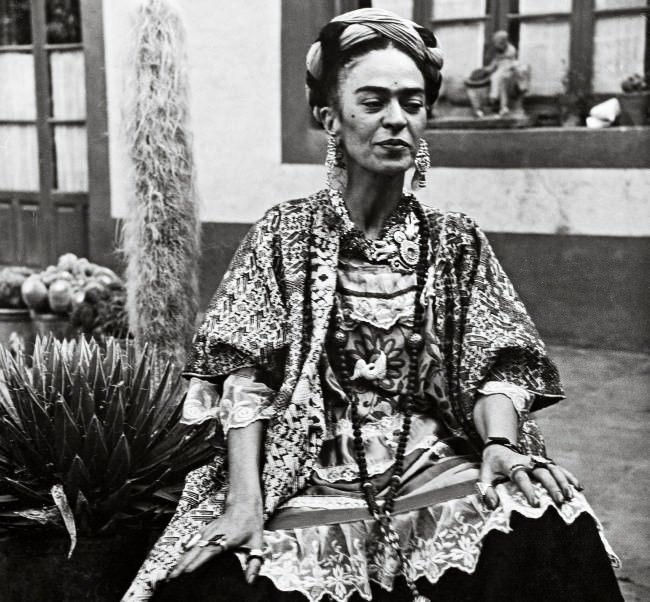
For months now I have been slowly making my way through Carr, O'Keeffe, Kahlo, Places of Their Own by Sharyn Rohlfsen Udall. Marja-Leena Rathje told me about the book and the accompanying exhibition in Canada, and I was fortunate in being able to find a second hand copy here in the UK.
I thank Marja-Leena so much as this book has been like attending a rewarding academic course, making me look at the work of two artists I did not know to any great degree: Carr and Kahlo, and compare aspects of their thinking and communication with an artist I have read a great deal about over the years: O'Keeffe. The book compares their art, their lives, and the achievements they made, covering the women's encounters with thoughts of nationality, gender, personal mythology, and success. And examining their progress as individuals, women, with distinctive separate voices with visual statements different not only from each other, but from their contemporary artists. The book examines similarities in difficulties they faced, as well as similarities in some aspects of their input and how that affected their output.
Harold Mortimer Lamb: Emily Carr (image from here)
Emily Carr: Wood interior (image from here)
Ralph Looney: Georgia O'Keeffe (image from here)
Georgia O'Keeffe: Abstraction White Rose (image from here)
Frida Kahlo (image from here)
Frida Kahlo: My Dress Hangs There (image from here)
Another immersive book I enjoyed a couple of years ago, which also included Georgia O'Keeffe was Three Artists (Three Women): Modernism and the Art of Hesse, Krasner, and O'Keeffe by Anne Middleton Wagner. And this fascinating journey into the art of women of the Americas continues with my current reading of Identity Unknown: Rediscovering Seven American Women Artists by Donna Seaman. I find it a brilliant continuation and expansion of my education in art history, which has been largely steeped in a European perspective.
Tuesday, June 20, 2017
Caught my eye 2: Black and white, and colour - and more
Ian McKeever: Henge I (image from here)
Powerful as his work on paper is, Ian McKeever's pieces have sometimes been lost to me amongst the crush. So now I make a point of seeking them out. This is usually most rewarding, and especially so this year. Henge I excited so many reactions and thoughts, not least because of all my thinking about prehistoric sites - most recently Callanish of course. It is a lithographic print, but once I had seen the three pieces entitled ... And The Sky Dreamt It Was The Sea a train of thought about density was set off.
Ian McKeever: ... And the Sky Dreamt it was the Sea (images from here)
I am also a fan of Tony Bevan's expressive lines, and this year it was an architectural drawing which attracted my attention.
Tony Bevan: House of wood (image from here)
Michael Broad: The Waves (image from here)
Chang Hui Hu: Peony Pavilion (image from here)
Hen Coleman: The Boundary (image from here)
Michelle Avison: Something Blue (image from here)
Norma Silverton: Triptych with trees (image from here)
Johanna Love: Ohne Strahlen VIII (Without Light) (image from here)
I was delighted to see one of Paul Furneaux's woodblock print sculptures. I just love the elegant combination of three dimensions and that watercolour finish.
Paul Furneaux: Orange: Blue: Grey (image from here)

Jane E. Allen: Shadowland (image from here)
There were many more individual pieces which I liked, but the last piece, on exiting the exhibition is a film installation by Isaac Julien - a beautiful, powerful, political work. It is in a class of its own. That really makes one think.

Western Union: Small Boats (image from here)
Powerful as his work on paper is, Ian McKeever's pieces have sometimes been lost to me amongst the crush. So now I make a point of seeking them out. This is usually most rewarding, and especially so this year. Henge I excited so many reactions and thoughts, not least because of all my thinking about prehistoric sites - most recently Callanish of course. It is a lithographic print, but once I had seen the three pieces entitled ... And The Sky Dreamt It Was The Sea a train of thought about density was set off.
Ian McKeever: ... And the Sky Dreamt it was the Sea (images from here)
I am also a fan of Tony Bevan's expressive lines, and this year it was an architectural drawing which attracted my attention.
Tony Bevan: House of wood (image from here)
Michael Broad: The Waves (image from here)
Chang Hui Hu: Peony Pavilion (image from here)
Hen Coleman: The Boundary (image from here)
Michelle Avison: Something Blue (image from here)
Norma Silverton: Triptych with trees (image from here)
Johanna Love: Ohne Strahlen VIII (Without Light) (image from here)
I was delighted to see one of Paul Furneaux's woodblock print sculptures. I just love the elegant combination of three dimensions and that watercolour finish.
Paul Furneaux: Orange: Blue: Grey (image from here)

Jane E. Allen: Shadowland (image from here)
There were many more individual pieces which I liked, but the last piece, on exiting the exhibition is a film installation by Isaac Julien - a beautiful, powerful, political work. It is in a class of its own. That really makes one think.

Western Union: Small Boats (image from here)
Labels:
Artist,
Caught my eye,
Exhibition,
Food for thought,
Inspiration
Subscribe to:
Posts (Atom)