Wednesday, March 14, 2012
Fade
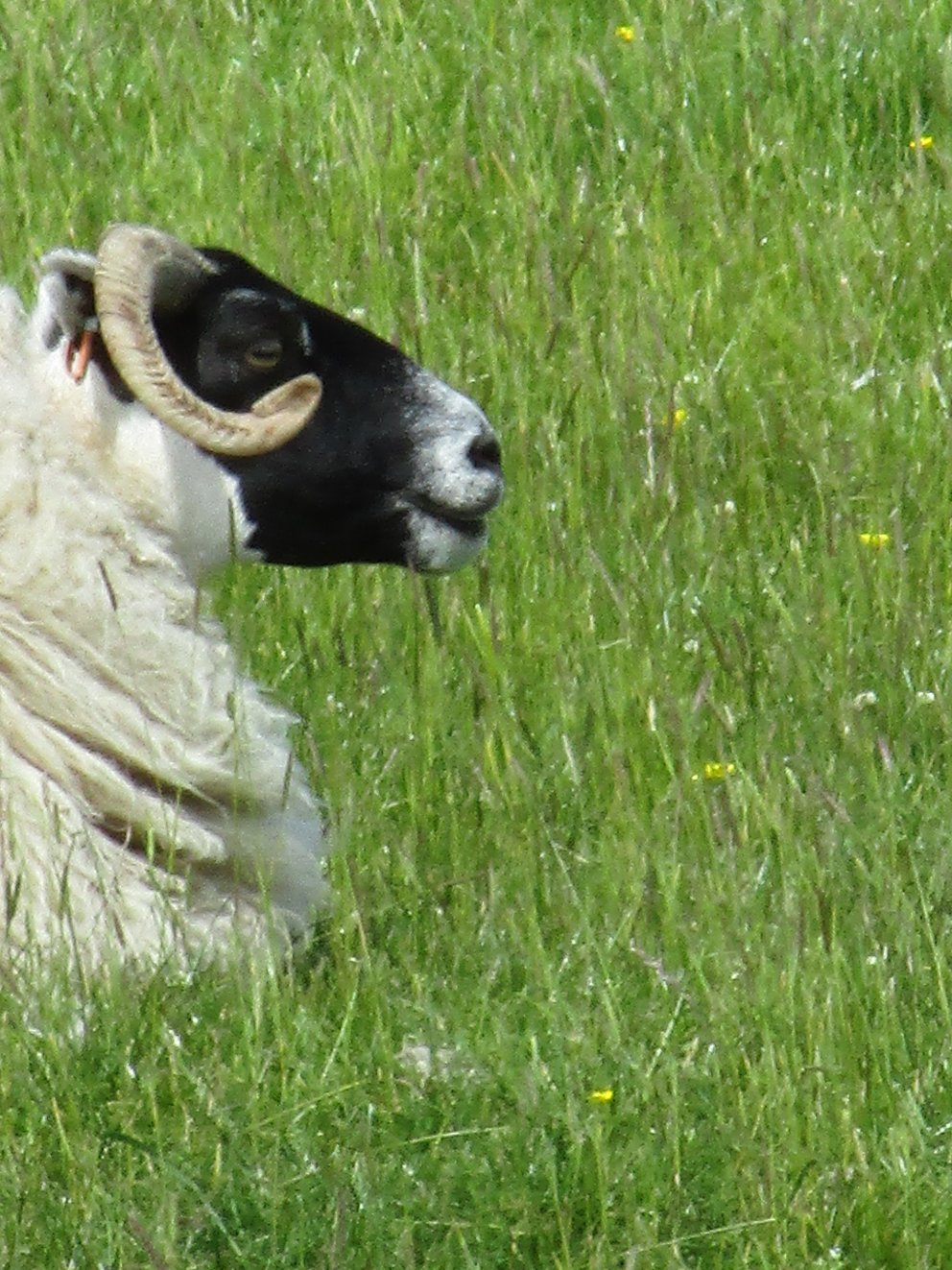
Printing on 'normal' paper, I was interested to see how this collagraph printed with only one inking.
Monday, March 12, 2012
Almost three wishes
Isn't it something we all do at some time or other? Wondering what we would ask for if offered three wishes by some passing fairy or pixie. It's rather like wondering what ten records we would take on our desert island. I was most fortunate with the latter, as I was invited onto the Zimbabwe radio version of Desert Island Discs in 1985 when I was working there.
But, back to three wishes. It has struck me more and more recently when going to exhibitions of art done in the early 20th century or earlier, that it is so easy to accept the insights, strengths, and powers of the work from this position of hindsight. This thought was especially prominent when I saw the Picasso and Modern British Art at Tate Britain.
And so, I have decided on two of my three wishes.
1. I wish that I had the power to see works of art as they would have been seen by a contemporary of the artist. I don't want to have the point of view of a conservative onlooker; just with the same perspective as I look at Gavin Turk, Cornelia Parker, or Fiona Rae for instance. That way I would be truly stretched to understand.
2. Is the other side of the first wish. I would like to have an idea of what posterity will make of today's artists who are celebrated now. I would dearly like to know whether my own opinions will/would stand the test of time.
I could assign my third wish to a desire to know what others think about my own work, but I should resist that. Although it's always interesting to hear the opinions of others, and those opinions can be helpful - but knowing one's own work enough to be able to know how to react to the views of others is what I should wish for.
But, back to three wishes. It has struck me more and more recently when going to exhibitions of art done in the early 20th century or earlier, that it is so easy to accept the insights, strengths, and powers of the work from this position of hindsight. This thought was especially prominent when I saw the Picasso and Modern British Art at Tate Britain.
And so, I have decided on two of my three wishes.
1. I wish that I had the power to see works of art as they would have been seen by a contemporary of the artist. I don't want to have the point of view of a conservative onlooker; just with the same perspective as I look at Gavin Turk, Cornelia Parker, or Fiona Rae for instance. That way I would be truly stretched to understand.
2. Is the other side of the first wish. I would like to have an idea of what posterity will make of today's artists who are celebrated now. I would dearly like to know whether my own opinions will/would stand the test of time.
I could assign my third wish to a desire to know what others think about my own work, but I should resist that. Although it's always interesting to hear the opinions of others, and those opinions can be helpful - but knowing one's own work enough to be able to know how to react to the views of others is what I should wish for.
Friday, March 09, 2012
Playing around with prints
I have been attracted to printmaking for different reasons. At first it was an interesting activity to get me out of the house for a whole working day on a regular basis. It also provides congenial companions as well as a whole area of image making to learn about (and I just love learning - and accumulating even more books on a new subject!). I am learning about all sorts of methods, and means within the methods, ... but two main aspects attract me most.I am excited by the unpredictability of the results. Sure, as one gains knowledge, confidence, and experience the gross surprises tend to diminish; but the different elements of inking, paper quality/wetness/colour, and miniscule variations in the plate itself always provide me with happy accidents. Indeed I look on the great majority of accidents as happy because the second aspect which delights me is the idea of repeats with variation. I do not want exact duplicates. I want subtle, or not-so-subtle differences.
Recently I made a collagraph plate with card, and incorporating offcuts from a rejected piece of stitching: the central panel, and the two triangles and bits of triangles at the base. I then printed onto sheets of Murano coloured pastel paper (which I bought when inspired and enthused by Meabh Warburton's post some time ago - I also used one as a base for my pastel work at West Dean).
So, I scanned the prints, and had a little play around with a bit more repetition. And I must say, I wish that I had Maebh's skills, because I'd rather like to render the results in tapestry.
I have also been trying some etching on zinc. We are experimenting with making plates reverse the normal practice of eating away the fine lines, and concentrating instead on the white areas of the print. Using aquatint, and then drawing with a litho crayon I took plankton as my subject - mostly because Holly, our brilliant teacher said that zinc works really well with blues and greens.
This is one of eight prints I made, using a different mix of green, Prussian blue, and white ink each time. I scanned them, and then played about a bit, and came up with this - which was inspired by a friend telling me about a recent diving holiday and by my seeing some dolphins on television.
I am not sure what I will do with any of these results of my play - if anything. But I am certainly enjoying this whole process.
Recently I made a collagraph plate with card, and incorporating offcuts from a rejected piece of stitching: the central panel, and the two triangles and bits of triangles at the base. I then printed onto sheets of Murano coloured pastel paper (which I bought when inspired and enthused by Meabh Warburton's post some time ago - I also used one as a base for my pastel work at West Dean).
So, I scanned the prints, and had a little play around with a bit more repetition. And I must say, I wish that I had Maebh's skills, because I'd rather like to render the results in tapestry.
I have also been trying some etching on zinc. We are experimenting with making plates reverse the normal practice of eating away the fine lines, and concentrating instead on the white areas of the print. Using aquatint, and then drawing with a litho crayon I took plankton as my subject - mostly because Holly, our brilliant teacher said that zinc works really well with blues and greens.
This is one of eight prints I made, using a different mix of green, Prussian blue, and white ink each time. I scanned them, and then played about a bit, and came up with this - which was inspired by a friend telling me about a recent diving holiday and by my seeing some dolphins on television.
I am not sure what I will do with any of these results of my play - if anything. But I am certainly enjoying this whole process.
Wednesday, March 07, 2012
Experiments with polyester litho plates
Both are the first prints using polyester litho plates which had the image printed on with a laser printer. It is difficult to roll the ink on evenly, and it is very easy to lose areas when using the roller. However, the top print was inked a la poupee with scrim, and has given an encouraging result. More trials are needed! But the polyester plate is such a brilliant alternative to a stone.
Tuesday, March 06, 2012
Looking back to the early 20th Century
Ben Nicholson: Crowned head - the queen 1932
At present I am surrounded by thoughts of work and artists who have been inspirations to me for many years. Last week we went to two most enjoyable exhibitions: feasts for both eye and brain. On Wednesday we went to Modern Art Oxford to see Graham Sutherland, An Unfinished World - a show of GS's landscape paintings. The second exhibition was Picasso and Modern British Art at Tate Britain, in which Sutherland also has works exhibited.The landscapes being shown in Oxford are dramatic drawings which for me capture that edginess in nature which accommodates both wild geology and agriculture's attempted taming hand. I first encountered Sutherland's paintings of the Pembroke landscape in Picton Castle, Pembrokeshire in the mid 70s. They made a great impression on me, especially those which described a distant view along with close-ups of plants, thorns, or twisted trees.
I have hardly come across any Graham Sutherland work since then, and so I was delighted to have the prospect of so many of his landscapes together in one exhibition, and some more of his work in another, both at once.
The Tate exhibition brings together one of the most influential painters in the world in the 20th Century, and seven British artists who were in different ways influenced - either by Picasso, his work, or the Zeitgeist in which he worked. The Nicholson at the top of this post is in the Tate exhibition, and for further illustrations and description this blog is great.
I found the Tate exhibition most interesting because of the thinking it spurred: how much of what Picasso was doing was generated because of the changing world he was in? He was such an energetic, enthusiast: a creator with an insatiable curiosity for seeing and trying and working and working and working, .... How much of this work directly influenced others around him, and how much was done in parallel? It does not really matter, but it is fascinating to speculate on and to observe the disparate work of one alongside several.
The exhibition takes the British artists Duncan Grant and Wyndham Lewis, Henry Moore, Ben Nicholson, Graham Sutherland, Francis Bacon, and David Hockney, and shows examples of how they were or might have been influenced. I came away agog once again at how exciting it must have been to be an artist in the early to mid 20th Century, and how interesting this opportunity is to re-examine these British artists of that period together - with the bonus of Picasso on the side.
Saturday, March 03, 2012
In a previous life
I was an
author's editor, a commissioning editor, an art editor, a publisher. These were
all some of the diverse aspects of my work which I very much enjoyed over many
years. I had two major kinds of relationships which fed and challenged me
creatively: my relationship with the book and its contents as a whole, and of
course the fundamental relationship with the creator - the author and/or
artist.
It was always my ambition that the latter relationship should be a partnership, co-dependent, and co-creative, and so I found it moving to find Gunter Grass's poem, words in farewell to his editor Helmut Frielinghaus at the back of the Review section of today's Guardian newspaper.
Thursday, March 01, 2012
Subscribe to:
Posts (Atom)